
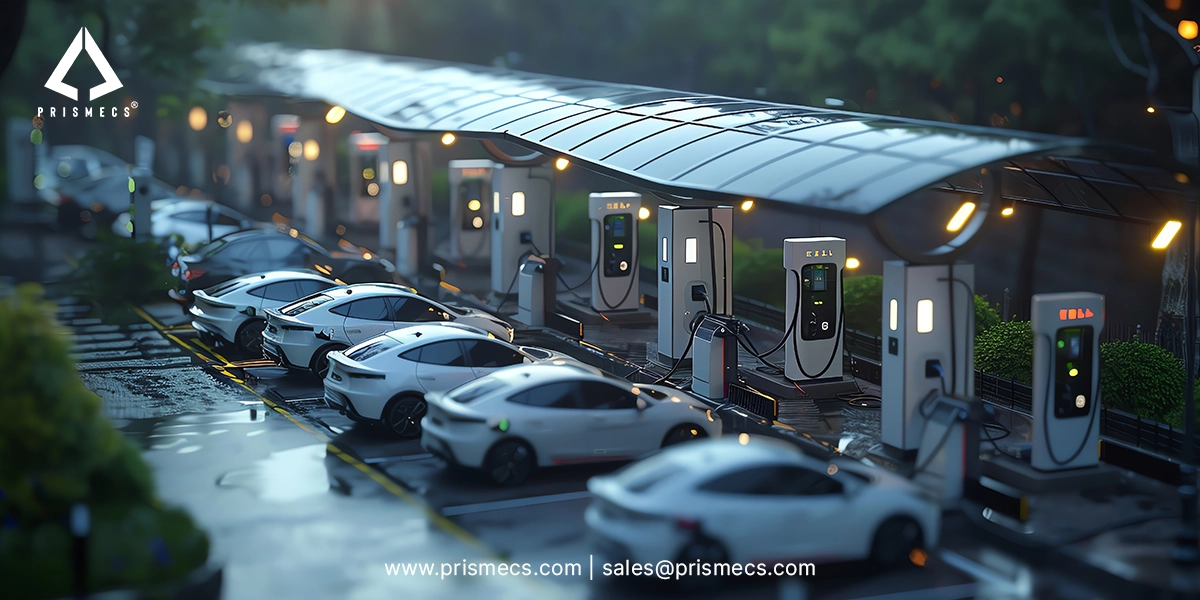
Mission and Vision Prismecs positions itself as a leader in utilizing diverse expertise and technology for innovative local and global solutions by fostering interconnectedness and knowledge sharing to turn potential into success. Envisioned to drive industrial innovation through the integration of diverse expertise and technology, we are dedicated to working with worldwide operators who seek comprehensive supply chain solutions/tailored engineering expertise with cutting-edge technology and expert insight to deliver customized solutions to revolutionize performance in the evolving industrial landscape. As we embark on a journey to lead the way in clean, cost-saving, and resilient power generation solutions, Prismecs is proud to introduce one of the driving forces behind our transformative strides – Adaptive Microgrid System (AMS), a groundbreaking solution that testifies our commitment to innovation on how to approach better power generation measures to fits in our energy portfolio. Let’s unravel the AMS and explore how it positions Prismecs at the forefront of industry advancements. AMS: Introduction A microgrid is a self-contained energy system designed for specific locales such as campuses, hospitals, business centers, or neighborhoods. In contrast to large, centralized grids that may experience efficiency losses over long-distance transmissions, a microgrid serves as a local energy provider, generating electricity for nearby customers and thus overcoming the efficiency loss. It incorporates distributed energy resources (DER), such as wind, solar, and diesel/natural gas generators, and often includes energy storage with integrated smart technology that leverages enhanced efficiency and responsiveness. Interconnected with adjacent structures, the microgrid provides a reliable and efficient energy supply using advanced software and control systems that monitor the energy demand, battery state of charge (SoC), availability of renewable resources, and other factors to improve reliability and efficiency. AMS: General Value Proposition Reduced Emissions Greenhouse gas emissions, including carbon dioxide (CO2), methane (CH4), and nitrous oxide (N2O), significantly contribute to climate change and the greenhouse effect. Excessive emissions result in severe climate issues like sea level rise due to ocean acidification, global warming, and declining biodiversity. The role of microgrids in mitigating carbon emissions and establishing a sustainable energy supply is crucial for organizations. Recent statistics indicate that renewable energy generators constitute over 20% of all US electricity in 2022, surpassing coal for the first time. Projections anticipate a 75% increase in solar energy generation and a 10% rise in wind power. Consequently, greenhouse gas emissions in the US amounted to 6,340 million metric tons of carbon dioxide equivalents, reflecting a 2.3% decrease from the peak observed in 2007, which was 15.8% above 1990 levels. 2 Cost-saving Microgrids provide cost-saving opportunities for organizations through the integration of advanced technologies and control systems. These systems optimize energy generation and storage, reducing waste and enhancing overall energy efficiency. The adoption of sequence islanding design is a notable example that streamlines the microgrid architecture, allowing for the use of more cost-effective inverters and batteries. Additionally, leveraging the Internet of Things (IoT) and Artificial Intelligence (AI) resources in predictive analysis and grid modeling enhances the responsiveness of microgrids to users' energy needs. facilitating data collection for proactive error identification, reducing downtime, cutting costs, and maximizing overall benefits. Standardized designs also expedite implementation and lower manufacturing costs. Additionally, microgrids can participate in demand response programs, adjusting energy consumption based on grid conditions to take advantage of lower electricity prices and avoid peak demand charges. By generating electricity locally, microgrids circumvent the need for extensive transmission and distribution infrastructure, leading to further cost savings. Moreover, microgrids can offer grid support services, such as ancillary services to the main grid, creating additional revenue streams to offset operational costs. Resiliency As per the Department of Energy (DOE) definition, resilience encompasses the ability to endure and recover from intentional attacks, accidents, or natural threats. It serves to mitigate the reliability impacts of frequent events, addressing dynamic weather patterns and evolving cyber risks that may necessitate increased utility investments. While the monetary value of resilience is perceived differently by stakeholders, it holds particular significance for sectors providing essential services and those situated in geologically or meteorologically active regions. Factors such as cumulative customer outage hours, critical energy demand, recovery time/cost, and utility revenue loss are considered. Microgrids contribute substantially to resilience by establishing a robust and dependable energy infrastructure. Through the islanded operation, Battery Energy Storage Systems (BESS), and improved grid stability, microgrids enhance their ability to withstand and recover from disruptions. Their adaptability to diverse conditions adds another layer of resilience. Microgrids also have the potential to serve as black start resources with suitable configurations and assets. However, their reliance on intermittent resources presents challenges for cost-effectiveness and feasibility during prolonged islanding requirements in severe conditions. Despite these challenges, microgrids remain a valuable tool for bolstering the resilience of critical infrastructure and ensuring a reliable power supply in the face of various threats and challenges. 3 Applications: E-mobility Charging Infrastructure According to Bloomberg NEF, the most efficient, cost-effective, and readily available approach to fully decarbonize road transport is through direct electrification using batteries. While fuel cell vehicles play a crucial role in challenging long-haul trucking applications, they are not seen to have a meaningful role in the passenger vehicle market. Electric vehicle (EV) sales are projected to surge, going from 10.5 million in 2022 to 27 million in 2026. In the United States, with support from the Inflation Reduction Act, EVs are expected to constitute nearly 28% of passenger vehicle sales by 2026, up from 7.6% in 2022. Despite the optimistic long-term outlook, challenges persist, particularly in managing the increased load from EVs, which could strain existing grid systems and create significant challenges for energy management. It is crucial to devise a strategic approach to power generation and distribution to address these challenges. Given the age and stress on current power grids, the assistance of local sustainable power plants, such as microgrids, is essential. The positive aspect is that the growing popularity of electric vehicles aligns with an increased reliance on renewable power generation, offering benefits not only to consumers but also to utility providers. This synergy can help in balancing supply and demand on the electric grid, paving the way for a more sustainable and resilient energy infrastructure. In response to the imperative to electrify transportation and meet corporate sustainability goals, there is a growing trend in the installation of microgrids (5.6M electric bus pot, 200M EV-charging hub). These microgrids integrate various components such as solar panels, batteries, backup generators, and electric vehicle (EV) chargers. The convergence of these technologies is particularly prominent in areas where the electrification of transportation is a public-policy priority or aligns with corporate sustainability objectives. Notably, there is a significant scale-up in the implementation of microgrid-as-a-service projects, underscoring the widespread adoption of this approach in addressing the evolving energy and transportation landscape. Vehicle-to-grid (V2G) and Vehicle-to-Everything (V2X) open up new possibilities by treating electric vehicles (EVs) as large batteries integrated into microgrids. This concept leverages EVs to address intermittency issues, allowing them to interact with the electric grid. Similar to demand response, V2G systems enable EVs to discharge electricity to the grid during periods of peak demand and charge their batteries during lower demand, optimizing operational costs, balancing energy supply and demand, and reducing peak load on the grid. Integrating charging infrastructure into smart microgrid facilities through V2G contributes to a more sustainable and resilient energy infrastructure, facilitating the integration of renewable energy sources and minimizing the overall environmental impact of electricity generation. V2G technology, despite its promising potential in enhancing the flexibility and efficiency of the electric grid, encounters challenges hindering widespread adoption. Key obstacles include the need for standardization, establishing regulatory frameworks, and ensuring that frequent charging and discharging do not negatively impact the lifespan of electric vehicle batteries. Nevertheless, continuous research and pilot projects are actively working to tackle these challenges, aiming to unlock the full potential of V2G systems and pave the way for their broader implementation. 4 Applications: Data Center Anthesis claims that on a global scale, data centers are estimated to consume around 3 percent of the total electric supply and contribute approximately 2 percent of total greenhouse gas (GHG) emissions, a figure comparable to the entire airline industry. Acknowledging this impact, the data center industry is positioned to play a crucial role in reducing GHG emissions, emphasizing the need for a transition to clean energy sources and significant improvements in energy efficiency. The interconnected nature of people and systems through the internet makes disruptions and downtime at data centers particularly impactful, causing widespread effects that can disable critical systems and infrastructure, and have ripple effects throughout the economy. Given the substantial financial implications, where downtime can cost tens of thousands of dollars per minute, the importance of resilience becomes both immediate and tangible. Consequently, many data center owners and operators are actively exploring the integration of microgrids as a solution to enhance resilience and achieve cost savings in this high-stakes environment. The Uptime Institute's survey in 2022 indicates that over 60% of data center operators have experienced power outages in the past three years. The consequences of such outages can range from significant financial losses for small businesses to costs escalating into tens of thousands of dollars per minute for large corporations. While efforts are made to address data center downtime through solutions like uninterruptible power supplies (UPS) or generators capable of powering equipment during short-term power loss, a report indicates that the top three most frequently cited root causes of outages are UPS battery failure, accidental Emergency Power Off (EPO)/human error, and exceeding UPS capacity. Moreover, the reliance on a substantial fleet of diesel generators poses several challenges for data center operators, including high emissions, limited effective usage time, and significant upfront and maintenance costs. In response to these challenges, many operators are shifting away from temporary power solutions and embracing more permanent and sophisticated microgrid solutions. Innovative business models are increasingly recognizing the cost-effectiveness of microgrids compared to traditional alternatives, especially when factoring in the comprehensive cost of an outage, including financial losses, reputational damage, and time lost. The Microgrid-as-a-Service model introduces a contract structure where customers face minimal or no upfront capital costs; instead, they pay for their microgrid service through a budgeted approach. Unlike traditional uninterruptible power supplies (UPS), microgrids employ more robust and powerful battery systems. The microgrid's controller enables a seamless transition into "islanded mode" during power outages, disconnecting from the main grid, and effortlessly reconnecting when the outage concludes. Operating in parallel with the main grid, the microgrid's control system optimizes resource usage, prioritizing renewable energies and Battery Energy Storage Systems (BESS) based on the specific microgrid configuration. Operators can capitalize on demand response opportunities by selling power and services back to the grid. In contrast to traditional UPS and backup generators, microgrids offer a continuous monitoring system that proactively detects and addresses malfunctions, contributing to improved reliability and system health. Overall, the Microgrid-as-a-Service model not only enhances resiliency but also aligns with sustainability goals, making it an attractive and forward-thinking solution for various industries. This strategic move aims to ensure system uptime and enhance overall resiliency, particularly during power
Tags: Prismecs
recent posts

Procurement
3 minutes read
EV Supply Chain Consulting
The modern EV supply chain extends far beyond vehicle assembly. It spans power generation assets, energy storage systems, grid-connected charging infr...
Procurement
8 minutes read
Overcoming Bottlenecks with EV Supply Chain Consulting
The rapid acceleration of electric vehicle (EV) adoption is reshaping not only the automotive sector, but the global energy and power infrastructure l...

Microgrid
5 minutes read
heading - Prismecs’ CEO Junaid Ali Highlights the-in-power-n-power-gas-in-power-
Houston, TX – May 28, 2025 — Prismecs, a global leader in energy solutions, is proud to announce that CEO Junaid Ali’s insightful article has been fea...

Microgrid
10 minutes read
AcceleratingTaiwan’sEnergyergyergyergy
Prismecs positions itself as a leader in utilizing diverse expertise and technology for innovative local and global solutions by fostering interconne...